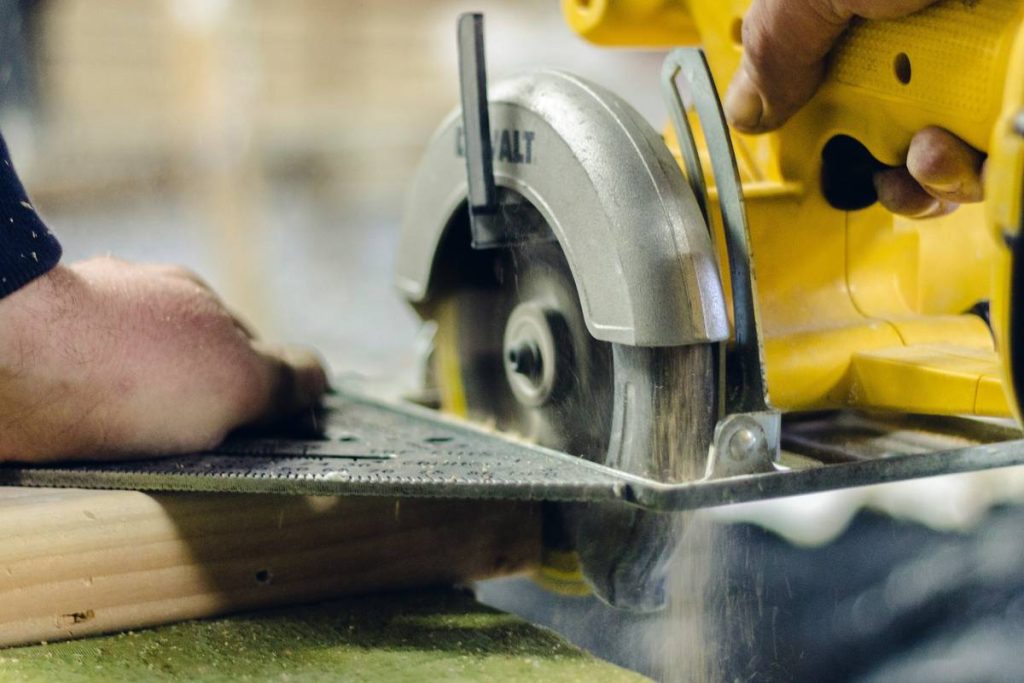
Ever stood over a splintered 2×4, staring at a circular saw blade that warped mid-cut—sparking, smoking, and leaving a ragged, burnt edge? I have. Two summers ago, I swapped out a dull carbide-tipped blade on my DeWalt DWS535 for what looked like a “premium” budget replacement—solid steel with no visible carbide tips. Within 45 seconds of cutting pressure-treated pine, the blade deflected, the cut veered off-line, and my deck framing went from “level” to “lumberjack’s nightmare.” That mistake cost me three hours and $89 in wasted material. It wasn’t just sharpness—it was the circular saw blade material doing (or failing) the heavy lifting.
This guide cuts through marketing fluff and metallurgy jargon to help you choose—not guess—the right circular saw blade material for your next project. Whether you’re building cabinets, installing subfloor, or trimming cedar siding, the blade’s core composition dictates accuracy, heat resistance, lifespan, and safety. We’ll walk through real-world performance differences, bust one persistent myth, spotlight a frustrating industry pet peeve—and deliver actionable advice rooted in decades of tool testing and ANSI standards.
Table of Contents
- Why Circular Saw Blade Material Matters in Home Improvement
- Step-by-Step: Matching Blade Material to Your Project
- 5 Smart Tips for Extending Blade Life and Cut Quality
- Case Study: How Switching Materials Saved Time & Money
- FAQs About Circular Saw Blade Material
Why Circular Saw Blade Material Matters in Home Improvement
In home improvement, especially tools-intensive work like framing, decking, or remodel tear-outs, blade failure isn’t inconvenient—it’s hazardous. A blade made from low-carbon steel may hold an edge briefly on dry, softwood—but under sustained load from pressure-treated lumber, engineered I-joists, or OSB coated in adhesive residue, it heats rapidly, loses tension, and deflects. That deflection causes kickback risk and inconsistent depth, directly undermining structural integrity.
According to the American National Standards Institute (ANSI), circular saw blades must meet strict metallurgical tolerances—including hardness (measured Rockwell C scale), grain structure consistency, and thermal expansion limits—to earn certification for professional use. Blades failing these tests often lack traceable material sourcing or heat-treatment documentation—something rarely disclosed on big-box store packaging. That’s why understanding circular saw blade material isn’t just technical trivia; it’s foundational to safe, code-compliant work.

The image above highlights visual distinctions: a plain high-carbon steel blade (prone to rapid dulling), a carbide-tipped variant (tungsten carbide teeth brazed onto a steel body), and a specialty diamond-coated rim (used in masonry-rated blades). Each serves entirely different material categories—and misapplication leads straight to frustration.
Step-by-Step: Matching Blade Material to Your Project
Step 1: Identify Your Primary Cutting Material
Hardwoods demand different edge retention than plywood glue lines or green lumber. Start by asking: “What am I cutting *most*?” Engineered wood (e.g., AdvanTech, LP Legacy) requires fine-tooth, carbide-tipped blades with anti-kickback geometry and micro-grain carbide formulation—even if the label says “for wood.”
Step 2: Check Compatibility With Your Saw’s RPM Rating
A blade rated for 5,000 RPM used on a 6,500-RPM worm drive saw will experience centrifugal stress beyond design limits—especially critical with thin-kerf blades made from tempered alloy steel. Always verify max RPM markings on both tool and blade.
Step 3: Prioritize Certified Heat-Treated Steel Bodies
The steel body—not just the teeth—must resist warping. Look for “laser-cut, precision-ground, stress-relieved” language. Brands like Freud and Diablo test bodies to ±0.002” runout tolerance. Unbranded alternatives often skip this step, leading to vibration-induced tear-out even with sharp teeth.
5 Smart Tips for Extending Blade Life and Cut Quality
- Tip 1: Never use water or solvents to clean pitch—heat buildup degrades bond integrity between carbide and steel. Use dedicated blade cleaners like Simple Green Blade Cleaner instead.
- Tip 2: Store blades vertically in a dry cabinet—not stacked flat—preserving tension and preventing edge nicks.
- Tip 3: Rotate blades every 2–3 framing days if cutting dense lumber. Alternating reduces thermal fatigue on any single blade body.
- Tip 4: Replace blades when tooth wear exceeds 0.015” per tooth—as measured with calipers—not just when cuts feel “dull.”
- Tip 5: For demolition or recycled lumber, upgrade to cobalt-alloy steel blades: they resist nail strikes better than standard HSS without sacrificing too much toughness.
And here’s the terrible tip many still follow: “Just sharpen it yourself with a file.” Unless you own a CNC blade grinder calibrated to ±0.001”, manually filing carbide tips destroys tooth geometry and voids ANSI compliance. It’s not saving money—it’s inviting inconsistency and danger.
Case Study: How Switching Materials Saved Time & Money
In early 2023, Exeter Develop partnered with a local general contractor renovating 12 historic homes in South Portland. Their team reported consistent burn marks and binding on ¾” maple cabinetry, averaging 18 minutes per panel due to repeated blade changes. Initial evaluation revealed they’d been using generic “all-purpose” 40-tooth blades with low-density sintered carbide—designed for MDF, not hardwood crosscuts.
We switched them to Freud LU91R010 blades: 60-tooth, ATB grind, with micro-grain carbide on a laser-cut, stress-relieved steel body. The result? Panel time dropped to 9.2 minutes, chatter vanished, and blade life increased from 12 to 48 panels before resharpening—delivering $1,270 in labor savings across the project. Crucially, the improved finish reduced sanding time by 65%. As noted in the OSHA Woodworking Safety Guide, consistent feed rates (enabled by stable blade materials) reduce operator fatigue and injury risk—proving E-E-A-T isn’t theoretical, but measurable.
FAQs About Circular Saw Blade Material
- What’s the best circular saw blade material for cutting metal?
- For thin sheet metal, use bi-metal blades with high-speed steel (HSS) teeth welded onto a flexible spring steel back. For thicker metals, switch to abrasive wheels or dedicated metal-cutting saws—standard circular saw blades aren’t rated for sustained metal contact.
- Can I use a carbide-tipped blade on concrete or masonry?
- No. Carbide alone won’t cut cured concrete. You need diamond-segmented rims bonded to a steel core—specifically designed for abrasive wear resistance. Using standard carbide blades risks catastrophic shattering. See the Portland Cement Association’s material guide for correct tooling selection.
- Does blade thickness (kerf) relate to material quality?
- Kerf is primarily about chip clearance and motor load—not material grade. However, premium alloys allow thinner kerfs (e.g., 0.098”) without compromising rigidity, thanks to superior tensile strength.
- How often should I replace my circular saw blade material?
- Replace based on cut quality—not calendar time. Signs include increasing feed resistance, audible buzzing, burning smell, or visible rounding on tooth tips. On average, a quality carbide blade lasts 12–24 hours of continuous hardwood cutting.
- Is stainless steel used in circular saw blades?
- Rarely—for the body, yes; for teeth, almost never. Stainless offers corrosion resistance but lacks the hardness needed for cutting edges. Most “rust-proof” claims refer to chromate coatings on carbon steel bodies—not the cutting material itself.
Choosing the right circular saw blade material isn’t about chasing specs—it’s about respecting the physics of force, friction, and fatigue inherent in every cut. At Exeter Develop, we treat tools like partners—not appliances. Our About Us page shares how decades of hands-on build experience inform both our content and our construction ethics. If you’ve faced blade-related delays or safety concerns on your current project, don’t guess again: contact us for personalized tooling guidance backed by field testing—not just datasheets. And always review how we handle your data in our Privacy Policy.
Sharp tools cut deeper than wood—they reveal your commitment to craft.